

Sustainability · 2025
In this section49 topics
- Sustainability Policy2 items
- Sustainability Goals & UN SDGs3 items
- Policy Review3 items
- Business Value Chain1 item
- Stakeholder Analysis2 items
- Environmental Sustainability — Overview1 item
- Environmental Policy & Guidelines3 items
- Environmental Policy Review3 items
- Energy — Plan & Guidelines2 items
- Energy — Electricity Consumption1 item
- Energy — Fuel Consumption2 items
- Energy — Targets1 item
- Energy — Performance & Outcomes2 items
- Water — Plan & Guidelines2 items
- Water — Withdrawal, Discharge & Consumption1 item
- Water — Targets1 item
- Water — Performance & Outcomes2 items
- Waste — Plan & Guidelines2 items
- Waste — Generation, Disposal & Recycling1 item
- Waste — Targets1 item
- Waste — Performance & Outcomes2 items
- GHG — Plan & Guidelines2 items
- GHG — Emissions1 item
- GHG — Emissions Verification1 item
- GHG — Targets1 item
- GHG — Performance & Outcomes2 items
- Environmental Legal Incidents1 item
- Other Environmental Management1 item
- Social Sustainability — Overview1 item
- Social Policy & Guidelines3 items
- Social Policy Review2 items
- Human Rights Due Diligence2 items
- Employees — Plan & Guidelines3 items
- Employees — Workforce1 item
- Employees — Remuneration & Provident Fund1 item
- Employees — Training & Development1 item
- Employees — Occupational Health & Safety1 item
- Employees — Labour Relations1 item
- Employees — Employee Representation2 items
- Employees — Targets1 item
- Employees — Performance & Outcomes2 items
- Customers — Plan & Guidelines3 items
- Customers — Satisfaction Results1 item
- Customers — Targets1 item
- Customers — Performance & Outcomes1 item
- Community & Social — Plan & Guidelines2 items
- Community & Social — Targets1 item
- Community & Social — Performance & Outcomes2 items
- Law Violation Incidents1 item
Sustainability Policy
Has a Sustainability Policy
Yes
Policy Description
The Company operates businesses in television program production, advertising, and various media, adhering to the principles of good corporate governance in its operations. It focuses on transparency, fairness, and accountability, prioritizing all stakeholder groups from a 3-dimensional sustainability perspective: social, environmental, and governance. Therefore, the Company has established clear business guidelines to create entertainment media that benefits society, the environment, and good governance, with the aim of continuously contributing to and fostering social responsibility through various programs over a long period. The Company's main policy is to be a creator of entertainment media beneficial to society. The Company is committed to developing and creating works, producing diverse content that responds to various emerging factors to enhance business capabilities and sustainable stability. Concurrently, it strives to promote a good society while creating value and growth for the business. The Company has established policies, management guidelines, and sustainability management goals in alignment with the United Nations' Sustainable Development Goals.
Sustainability Goals & UN SDGs
Has Sustainability Goals
Yes
Goals Description
The company is committed to conducting business by integrating sustainability concepts into its operational strategies to achieve stable business growth, alongside creating value for society, the environment, and corporate governance, with the following objectives:
Economic and Business Growth (Economic Sustainability).
1. Develop quality television and digital media content that meets audience needs.
Guidelines.
Continuously study and analyze consumer behavior trends and the media industry.
Promote the development of creative concepts in producing new programs and content formats.
Evaluate feedback from viewers and digital media users to continuously improve content quality.
Expand cooperation with domestic and international business partners.
Guidelines.
Establish cooperation with program producers, media platforms, and relevant business partners.
Develop co-production projects with domestic and international partners.
Promote the exchange of knowledge and technology in media production.
Increase efficiency in managing production costs.
Guidelines.
Utilize technology and innovation in program production processes.
Improve work processes to increase efficiency and reduce unnecessary costs.
Efficiently manage resources and production equipment.
Build competitiveness in the media and entertainment industry.
Guidelines.
Develop the expertise and skills of personnel in the media industry.
Monitor trends and new technologies in the media and entertainment industry.
Develop production quality to meet international standards.
Expand business to digital platforms and new media formats.
Guidelines.
Develop content suitable for digital platforms and online media.
Increase content distribution channels through new media platforms.
Adjust production strategies to align with changing consumer behavior.
6. Generate revenue from related businesses.
Guidelines.
Develop content production services for organizations and external clients.
Promote the organization of activities or projects related to the company's content.
Efficiently manage content copyrights to generate additional revenue.
Environmental (Environmental Sustainability). Manage environmental aspects covering 5 key issues: electricity energy management, water energy, greenhouse gases, fuel, and waste management.
1. Promote efficient resource utilization.
Guidelines.
Reduce paper usage by promoting the use of digital documents. Utilize an online Production Management system for documents such as scripts, call sheets, schedules, and print only essential documents.
Appropriately manage energy consumption in the office and on set, including turning off electrical appliances and lights when not in use, fully closing water taps, and setting air conditioner temperature to 25 degrees Celsius.
Promote efficient resource utilization in the production process. Reduce the use of unnecessary materials in program production. Select recyclable materials.
Prepare appropriate food to reduce food waste on all production sets/projects.
Efficiently manage greenhouse gases by developing a greenhouse gas reduction plan, including monitoring and evaluation.
Campaign for employees and staff to be aware of reducing waste from program production.
Guidelines.
Promote waste separation and waste management on all production sets/projects.
Campaign and organize environmental training to raise environmental awareness among 100% of employees and staff by 2026.
Develop environmentally friendly work and production processes (Green Production).
Guidelines.
Implement Green Production concepts in program production planning and improve work processes to reduce energy consumption.
Select environmentally friendly materials and equipment.
Promote environmentally friendly production that reduces impact. Encourage the use of technology that helps reduce resource consumption.
Social (Social Sustainability).
Produce socially responsible program content.
Guidelines.
Establish guidelines for content production that consider media ethics.
Review content before publication to prevent infringement of others' rights.
Promote creative and socially beneficial content.
Promote a safe working environment.
Guidelines.
Implement safety measures for work both in the office and on set.
Provide safety training for employees and staff.
Provide appropriate equipment and working environment.
Uphold respect for human rights according to international principles.
Guidelines.
Promote training and skill development in media, technology, and creativity for personnel.
Non-discrimination and equality.
No child labor and forced labor.
Respect for labor rights and freedom of association.
4. Create content that promotes social and cultural values.
Guidelines.
Produce content that reflects social and cultural values.
Promote diversity and equality in program content.
Support content that fosters social understanding.
5. Create opportunities for new generation personnel.
Guidelines.
Provide opportunities for new generations to participate in the media industry.
Support internship programs and the development of new generation personnel.
Corporate Governance (Governance Sustainability).
1. Conduct business with transparency and in accordance with the law.
Guidelines.
Strictly comply with relevant laws, regulations, and requirements.
Disclose important information transparently and completely.
Establish appropriate governance processes.
2. Promote business ethics.
Guidelines.Establish a code of business ethics for directors, executives, and employees.
Promote honest and ethical business operations.
Provide channels for receiving complaints or reports of inappropriate conduct.
3. Elevate good corporate governance standards.
Guidelines.Promote the role of the company's board of directors in corporate governance.
Continuously improve governance policies and practices.
Build confidence for shareholders and stakeholders.
UN Sustainable Development Goals
| SDG Goal |
|---|
| Goal 3 Good Health and Well-being |
| Goal 3 Good Health and Well-being |
| Goal 3 Good Health and Well-being |
| Goal 4 Quality Education |
| Goal 4 Quality Education |
| Goal 4 Quality Education |
| Goal 12 Responsible Consumption and Production |
| Goal 12 Responsible Consumption and Production |
| Goal 12 Responsible Consumption and Production |
| Goal 13 Climate Action |
| Goal 13 Climate Action |
| Goal 13 Climate Action |
| Goal 16 Peace, Justice and Strong Institutions |
| Goal 16 Peace, Justice and Strong Institutions |
| Goal 16 Peace, Justice and Strong Institutions |
Policy Review
Policy Reviewed This Year
Yes
Policy Changed This Year
Yes
Review Details
B.E. 2565 (2022) Announce the Personal Data Protection Policy (PDPA).
B.E. 2566 (2023) Announce the environmentally friendly procurement policy.
B.E. 2567 (2024) Review the good corporate governance policy.
B.E. 2568 (2025)
-
Organize social and environmental activities, along with providing training to executives, employees, and business partners.
-
Review the good corporate governance policy.
-
The Company has commenced the preparation of its organizational greenhouse gas emissions inventory (Carbon Footprint for Organization: CFO). It is currently developing a comprehensive data collection system and related processes. As the operations in B.E. 2568 (2025) are initial and full-year data is not yet complete, the Company plans to designate B.E. 2569 (2026) as the base year for measuring and comparing future greenhouse gas emissions.
Business Value Chain
Value Chain Description
The company recognizes and prioritizes the care of all stakeholder groups, whether internal stakeholders, namely shareholders, employees, customers, partners, and external stakeholders, namely business competitors, consumers, communities, the environment, and regulatory bodies. The company is well aware that responding to the needs or expectations of stakeholders will benefit its operations and business development, while also considering the rights of all stakeholders in accordance with relevant laws and regulations.
Stakeholder Analysis
Introduction
Analysis of stakeholders in the business value chain
As a content producer, the Company recognizes the importance of all stakeholder groups throughout the business value chain, including those affected by business operations, alongside efficient management of the business value chain to meet stakeholder expectations. This ensures that stakeholders are treated fairly and equally, and their expectations are met appropriately and with maximum efficiency. Stakeholders are categorized into 5 groups, namely:
Executives / Employees | Business partners | Audience/Viewers | Society, community | Shareholders |
Executives and employees of the company | Stations, partners, customers, entrepreneurs in the same business, artists, actors, hosts | Viewers, fan clubs | General public, communities around the company, educational institutions, media, foundations, organizations, government agencies, regulatory bodies | Ordinary shareholders, debenture holders, legal entities, retail investors, securities companies, securities analysts |
Stakeholder engagement policy
The Company prioritizes and is committed to managing stakeholders efficiently and fairly to create shared value and grow together. Key stakeholder groups include shareholders, employees, customers, business partners, consumers, competitors, communities, the environment, regulatory bodies, and government agencies. The Company will implement a systematic approach to operations covering all business units, focusing on caring for and building relationships with all stakeholder groups, as well as communicating appropriately with all stakeholders.
Stakeholder engagement process
The Company considers the role of stakeholders and prioritizes the rights of all stakeholder groups, ensuring appropriate, equitable, and fair treatment to foster good relationships with all stakeholders.
Identification of material sustainability issues
The Company prioritizes material sustainability issues related to economic, social, and environmental aspects of its business operations, as well as appropriately addressing the expectations of both internal and external stakeholders. In 2023, material sustainability issues covering economic, social, and environmental aspects, as well as risk issues, were reviewed through various departments responsible for each stakeholder group. Sustainability priorities were then ranked based on two key components: the importance and impact on both internal and external stakeholders, and the opportunities and impacts on business operations across economic, social, and environmental dimensions. Subsequently, a summary diagram of material sustainability issues was prepared to identify the significance of each issue.
Material sustainability issues
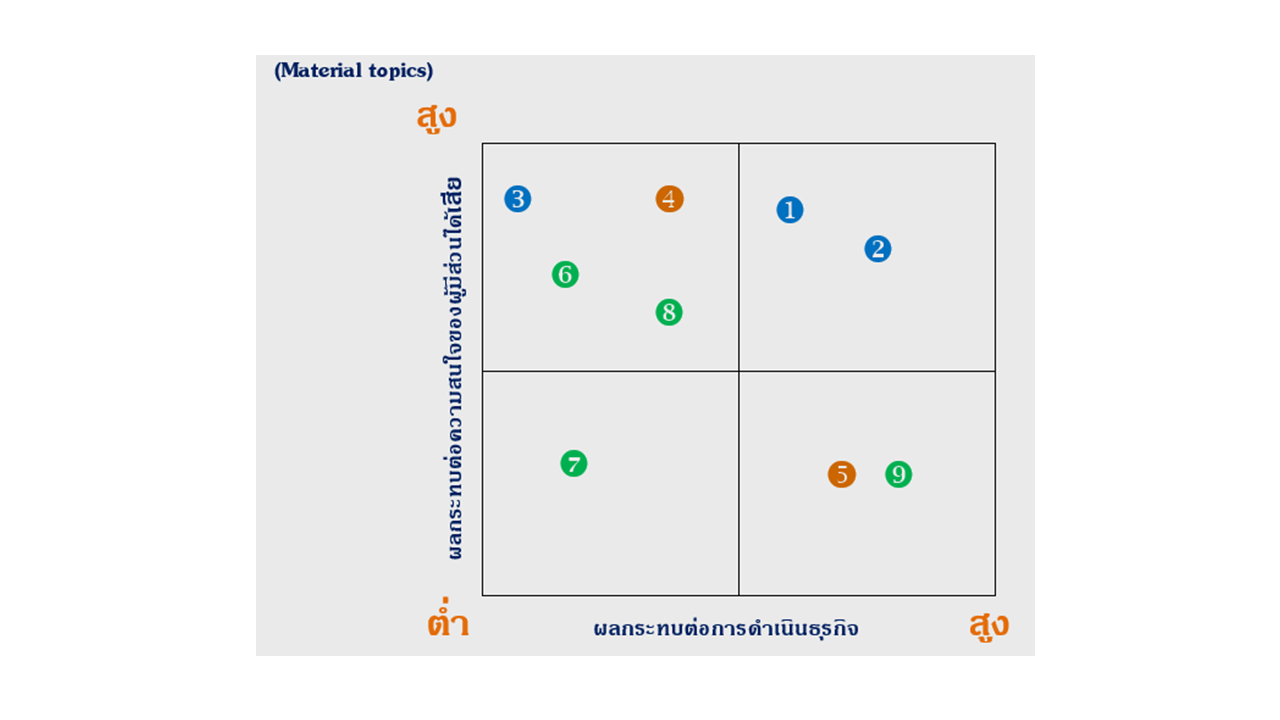
Economic / Governance dimension | Social dimension | Environmental dimension |
|
|
|
|
|
|
|
| |
|
From the assessment results of material sustainability issues, the operational performance in each area can be summarized according to the dimensions of corporate governance, sustainability management in the social dimension, and the environmental dimension, as follows:
Governance aspect | Social aspect | Environmental aspect |
The Company emphasizes good corporate governance as follows:
| The Company recognizes and prioritizes the social dimension as follows:
| Applying the 3 principles Appropriately applying the 3Rs (Reduce, Reuse, Recycle) within the organization for the valuable utilization of existing resources
|
Stakeholder Analysis
| Stakeholder Type | Stakeholders | Stakeholder Expectations | Response to Expectations | Communication Activities |
|---|---|---|---|---|
| External stakeholders | 2913 · Description: Shareholders | Good returns / performance; Management under good governance principles. | - Hold one annual general meeting of shareholders - Prepare an annual report - Disseminate news of significant business activities - Provide channels for receiving complaints | 2938 · Description: Visit · 2941 · Description: Online Communication · 2944 · Description: Annual General Meeting (AGM) · 2945 · Description: Complaint Reception |
| Internal stakeholders | 2921 · Description: Employees | - Compensation and Benefits - Job Security and Career Advancement - Skill, Knowledge, and Competency Development - Workplace Safety | - Sending employees for training seminars- Fire evacuation drills, first aid training- Implementing internal communication through various channels such as bulletin boards, company website, email, and Line- Organizing recreational activities such as traditional New Year's water pouring ceremony, merit-making and alms-giving, and New Year's celebration parties | 2940 · Description: Social Event · 2941 · Description: Online Communication · 2942 · Description: Internal Meeting · 2945 · Description: Complaint Reception · 2947 · Description: Satisfaction Survey · 2948 · Description: Training / Seminar |
| External stakeholders | 2936 · Other name: Customers / Partners / Consumers · Description: Others | - High-quality products and services - Timely delivery of goods and services - Adherence to fair and transparent trade practices, in accordance with specified terms and conditions - Access to television programs and entertainment media that provide both educational content, benefits, and entertainment | - Meetings with customers / partners - Satisfaction surveys - Handling complaints through designated channels - Fair procurement - Compliance with agreements, contracts, and commercial terms - Participation in social activities organized by customers | 2941 · Description: Online Communication · 2943 · Description: External Meeting · 2945 · Description: Complaint Reception |
| External stakeholders | 2898 · Description: Competitors | - Non-infringement of intellectual property- Competing within the framework and rules of free and fair competition | Publication of news on the company's website Social gatherings on various occasions | 2941 · Description: Online Communication |
| External stakeholders | 2936 · Other name: Community / Society · Description: Others | - No adverse impact on communities and the environment from operations- Responsibility towards society as a whole- Environmental and energy conservation | - Complaint Handling - Organizing activities with the participation of surrounding communities - Environmental Management of the Surrounding Area | 2938 · Description: Visit · 2940 · Description: Social Event · 2945 · Description: Complaint Reception |
| External stakeholders | 2931 · Description: Government agencies and Regulators | Compliance with relevant laws and regulations; Support for the operations of government agencies; Published information is accurate and sufficient | - Comply with relevant laws and regulations.- Facilitate the participation of artists under contract in various public relations activities of government agencies.- Disclose information as required by law, accurately and sufficiently. | 2943 · Description: External Meeting · 2948 · Description: Training / Seminar |
Environmental Sustainability — Overview
Operating Results — Introduction
In 2025, the company continuously organized the "Green Office (TVT GO GREEN)" project, focusing on energy conservation, reducing environmental impact, and raising awareness through campaigns encouraging employees to save more electricity, tap water, and fuel. Waste and refuse in the office are managed by sorting waste according to type. Furthermore, the company has managed noise pollution. The company has a system to prevent and control noise that does not cause disturbance or nuisance to surrounding communities, by selecting sound-absorbing materials that meet international standards, along with sound system control staff throughout filming, to avoid affecting service users within the studio, in accordance with the standard noise levels prescribed by law. In 2025, there were no complaints regarding noise pollution, and from 2023 to 2025, the company organized the "TVT Let's Save: Turn Off, Unplug, Reduce, Adjust" campaign. continuously, by campaigning and inviting employees to jointly save electricity and tap water, reduce the use of plastic cups and plastic straws, and promote economical electricity usage to raise awareness and encourage electricity conservation. This is publicized through digital media, public announcement boards, and by placing campaign stickers at various points within the company and studios. Furthermore, natural resources are managed. The company has a policy on conserving all forms of resources by campaigning for employees to use resources wisely through Project Smart Office which This project supports employees in transforming their traditional work methods by utilizing materials, equipment, and paper with maximum value and benefit. This involves transitioning to a paperless office by refraining from distributing documents at meetings unless absolutely necessary, promoting the use of double-sided printing, sending documents via the internet, storing documents as files, sharing information via cloud servers, integrating applications into work processes, and reusing office supplies such as paper clips and document folders. The benefits include reducing paper consumption, saving costs on material and equipment purchases, decreasing work time, and enhancing data storage efficiency.
Environmental Policy & Guidelines
Has an Environmental Policy
Yes
Policy Description
Social, Community, and Environmental Responsibility Policy and Guidelines
The Company is committed to and prioritizes conducting business in accordance with social and environmental management policies and goals. It focuses on energy and environmental conservation, reducing social and environmental impacts, and implementing various projects to emphasize the valuable and necessary use of energy and resources to prevent, mitigate, and reduce resource waste. The environmental policy and guidelines are as follows:
1. Conduct business with honesty, integrity, ethics, and responsibility towards society, communities, and the environment.
2. Support and encourage executives and employees at all levels of the company to be responsible for society, communities, and the environment, and to possess a volunteer spirit without expecting rewards.
3. Support and promote the organization of activities that create sustainable benefits for society, communities, and the environment, consistently giving back to society. The organized activities are appropriate and genuinely beneficial to society, communities, and the environment.
4. Participation in the development of business communities and society as a whole, covering economic, social, community, and environmental aspects.
5. Promote and provide social and environmental knowledge to employees at all levels of the company to collectively develop and be responsible for society, communities, and the environment.
6. Respect for human rights without discrimination. Regardless of the race, nationality, religion, and culture of the various stakeholders of the Company, the Company will manage with fairness and promote sustainable collaborative development.
Environmental Guidelines
| Guideline |
|---|
| Electricity Management |
| Fuel Management |
| Water Management |
| Noise Pollution Management |
Environmental Policy Review
Policy Reviewed This Year
Yes
Review Details
Details of significant environmental changes over the past year
The Company recognizes and prioritizes the reduction of greenhouse gas emissions and has therefore reviewed its plans, measures, practices, and targets regarding waste and refuse management and greenhouse gas reduction, as follows:
-
Waste and refuse management plan through the "TVT ZERO WASTE" project activities to manage waste and refuse generated from both offices and studios, with clear segregation of each waste type, by collaborating with at least one partner, such as the Recycle Dat Thailand project, Wang Thonglang District Office, etc.
-
Management of greenhouse gases, energy, and environmental and natural resource changes by reducing the use of
all forms of non-renewable natural resources.
-
Carbon footprint assessment plan by studying greenhouse gas emissions throughout the production chain to plan for greenhouse gas reduction. This operation may be conducted in collaboration with the Thailand Greenhouse Gas Management Organization (TGO), such as the LESS project, to achieve concrete results consistent with international standards by 2028.
Policies & Guidelines Changed
| Change |
|---|
| Waste Management |
| Greenhouse Gas and Climate Change Management |
Energy — Plan & Guidelines
Has an Energy Management Plan
Yes
Plan Description
Energy management through various activities and projects for sustainable development, including:
-
Communicate and organize internal activities to raise awareness and promote participation in addressing climate change among directors, executives, employees, and individuals working with the company on an ongoing basis.
-
Campaign to encourage everyone to reduce the use of electricity, water, etc., through the "TVT Let's Save: Turn Off, Unplug, Reduce, Adjust" activity within the office building and during studio productions.
-
Management of greenhouse gases, energy, and environmental and natural resource changes by reducing the use of all forms of non-renewable natural resources.
-
Carbon footprint assessment plan by studying greenhouse gas emissions throughout the production chain to plan for greenhouse gas reduction. This operation may be conducted in collaboration with the Thailand Greenhouse Gas Management Organization (TGO), such as the LESS project, to achieve concrete results in line with international standards by 2028.
Energy — Electricity Consumption
Electricity Consumption
| Metric | Current Year | Previous Year | Two Years Ago |
|---|---|---|---|
| Total electricity consumption within the organization (Kilowatt-Hours) | 486,951 | 820,108 | 533,816 |
| Electricity purchased for consumption from non-renewable energy sources (Kilowatt-Hours) | 486,951 | 820,108 | 533,816 |
| Electricity purchased or generated for consumption from renewable energy sources (Kilowatt-Hours) | 0 | 0 | 0 |
Energy — Fuel Consumption
Introduction
The company has implemented transportation measures to promote fuel conservation through the "Carpooling" activity. It also maintains a central vehicle management system to provide data for travel planning. In 2025, the recorded diesel and gasoline fuel consumption from operations and various activities totaled 4,641.79 liters, representing a decrease of 44.83% compared to 2024. This fluctuation in fuel consumption is attributed to the varying operational activities of the company.
Fuel Consumption
| Metric | Current Year | Previous Year | Two Years Ago |
|---|---|---|---|
| Crude oil (Barrels) | 0 | 0 | 0 |
| Coal (Metric tonnes) | 0 | 0 | 0 |
| Jet fuel (Litres) | 0 | 0 | |
| Diesel (Litres) | 2,191.84 | 5,649.07 | 5,152.53 |
| Gasoline (Litres) | 2,449.95 | 2,764.03 | 3,653.33 |
| Fuel oil (Litres) | 0 | 0 | 0 |
| Natural gas (Standard cubic feet) | 0 | 0 | 0 |
| LPG (Kilograms) | 0 | 0 | 0 |
| Steam (Metric tonnes) | 0 | 0 | 0 |
Energy — Targets
Has Set Targets
No
Energy — Performance & Outcomes
Has Performance Results
Yes
Performance Description
The company regularly disseminates internal communications through the TVT Line group and announcement boards (television screens) every month to inform employees about various projects and activities. In 2025, the company has continuously implemented the "4 S" project, which includes 1. Save Energy, 2. Save Money, 3. Save World, and 4. Save For TV Thunder, up to the present. This year, the company continues to expand the installation of "solar cell lamps" to replace LED bulbs around the office building and Green Park Studio to further reduce electricity consumption and switch to solar energy.
Furthermore, guidelines and measures for energy conservation have been established under the "TVT Let's Save: Turn Off, Unplug, Reduce, Adjust" campaign, as follows:
-
Turn off lights, turn off water taps, turn off computer screens, turn off all electrical appliances when not in use.
-
Unplug electrical appliances when finished using them.
-
Reduce waste, reduce the use of plastic bottles, foam boxes, and food and beverage packaging, reduce food waste from activities, conduct meetings via online media, support the reduction of fuel consumption from travel, reduce the use of paper and plastic.
-
Set air conditioner temperature to 25 degrees Celsius.
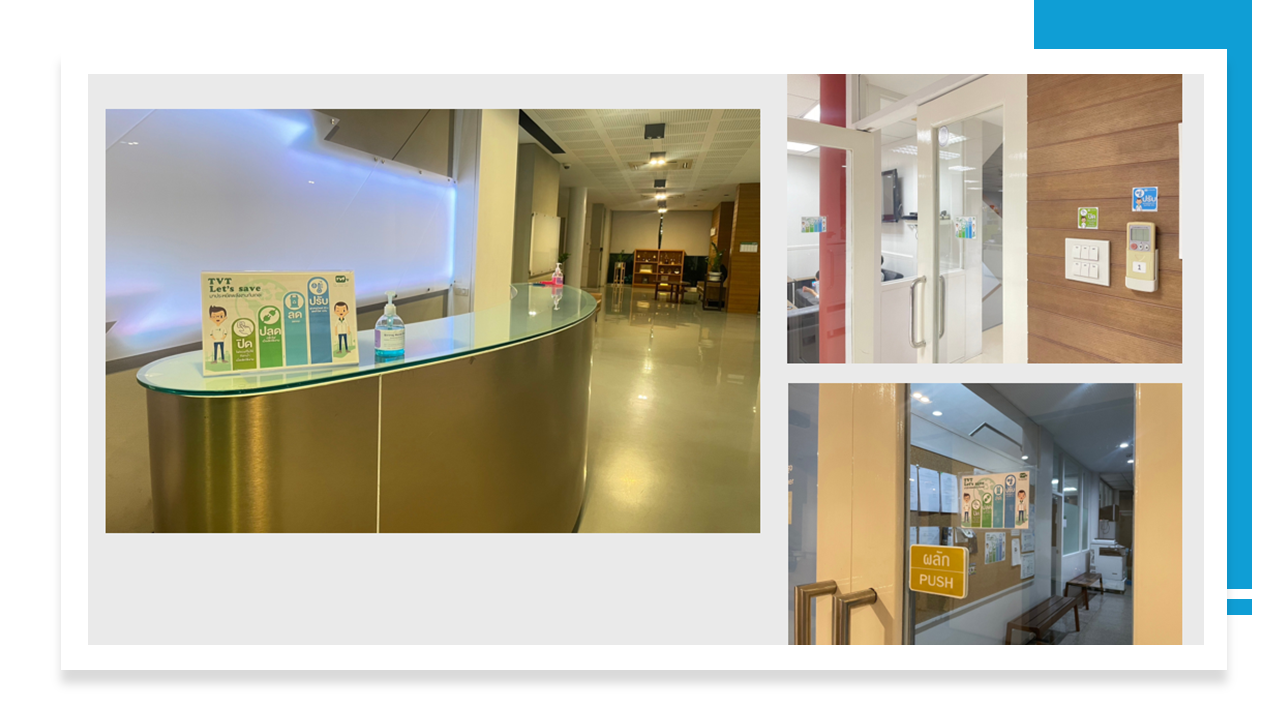
In 2025, the electricity consumption data from operations and various activities amounted to 486,951 kilowatt-hours, representing a decrease of 40.62% compared to 2024. This is because electricity consumption fluctuates according to the activities for which customers rent studio space, and the number of customers decreased compared to the previous year.
Water — Plan & Guidelines
Has a Water Management Plan
No
Plan Description
The company utilizes water from a single source, namely the Provincial Waterworks Authority, which does not adversely affect other water sources. A wastewater treatment system is available within the studio premises, with consistent monitoring and maintenance by external private agencies to ensure its operational readiness. For the office building, the company adheres to the regulations concerning wastewater management for establishments under the Bangkok Metropolitan Administration. In 2025, the water consumption data from operations and various activities amounted to 2,440 units, representing a decrease of 35.62% compared to 2024. This reduction is due to the fluctuation in water usage based on customer activities renting studio space for filming, with a decrease in the number of customers compared to the previous year.
Water — Withdrawal, Discharge & Consumption
Water Withdrawal, Discharge & Consumption
| Metric | Current Year | Previous Year | Two Years Ago |
|---|---|---|---|
| Total water withdrawal (Cubic meters) | 2,440 | 3,790 | 3,225 |
| Total water withdrawal by third-party water (Cubic meters) | |||
| Total water withdrawal by surface water (Cubic meters) | |||
| Total water withdrawal by groundwater (Cubic meters) | |||
| Total water withdrawal by seawater (Cubic meters) | |||
| Total water withdrawal by produced water (Cubic meters) | |||
| Percentage of wastewater treated before discharge (%) | |||
| Total water discharge (Cubic meters) | |||
| Total water discharge to third-party water (Cubic meters) | |||
| Total water discharge to surface water (Cubic meters) | |||
| Total water discharge to groundwater (Cubic meters) | |||
| Total water discharge to seawater (Cubic meters) | |||
| Total water consumption (Cubic meters) | 2,440 | 3,790 | 3,225 |
| Recycled water (Cubic meters) |
Water — Targets
Has Set Targets
No
Water — Performance & Outcomes
Has Performance Results
No
Performance Description
-
Waste — Plan & Guidelines
Has a Waste Management Plan
No
Plan Description
The company prioritizes and is committed to waste management, ensuring maximum efficiency in internal waste separation through the "3R" project: Reduce, Reuse, and Recycle. The company has appropriately adopted the 3R concept within the organization to ensure the valuable utilization of existing resources. In the production of game shows, variety shows, or event organization, the company opts for alternative materials for set construction instead of real wood, and manages to minimize unusable waste materials. In the offices and studio production facilities, waste separation is implemented by providing separate bins for wet waste, general waste, recyclable waste, and hazardous waste at various points. This allows employees to separate waste before disposal and also reduces the volume of waste within the office. Furthermore, the company also provides
TVT ZERO WASTE Project: Waste management for waste generated from both offices and studios. The company has a waste separation system, providing separate waste bins in the building areas. This is to educate employees on basic waste separation, especially the separation of single-use plastics, such as plastic water bottles. Subsequently, the waste is collected and sent to the Recydle Day Thailand project.
Waste separation at "Production Sets": The company implements waste separation at production sets as follows: 1) Food waste without contaminated containers is bundled into bags. Subsequently, the Bangkok Metropolitan Administration district office collects it for management to support the "No Mixed Waste" project. 2) Recyclable waste is separated by type. Plastic bottles, in particular, are also sent to the Recycle Day Thailand project.
Waste — Generation, Disposal & Recycling
Waste Generation, Disposal & Recycling
| Metric | Current Year | Previous Year | Two Years Ago |
|---|---|---|---|
| Total waste generated (Kilograms) | 12,550 | 22,715 | 23,973.5 |
| Non-hazardous waste (Kilograms) | 12,550 | 22,715 | 23,973.5 |
| Non-hazardous waste - Landfilling (Kilograms) | |||
| Non-hazardous waste - Incineration (with energy recovery) (Kilograms) | |||
| Non-hazardous waste - Incineration (without energy recovery) (Kilograms) | |||
| Non-hazardous waste - Other disposal operations (Kilograms) | |||
| Hazardous waste (Kilograms) | 0 | 0 | 0 |
| Hazardous waste - Landfilling (Kilograms) | |||
| Hazardous waste - Incineration (with energy recovery) (Kilograms) | |||
| Hazardous waste - Incineration (without energy recovery) (Kilograms) | |||
| Hazardous waste - Other disposal operations (Kilograms) | |||
| Total reused/recycled waste (Kilograms) | |||
| Reused/Recycled non-hazardous waste (Kilograms) | |||
| Reused non-hazardous waste (Kilograms) | |||
| Recycled non-hazardous waste (Kilograms) | |||
| Reused/Recycled hazardous waste (Kilograms) | |||
| Reused hazardous waste (Kilograms) | |||
| Recycled hazardous waste (Kilograms) |
Waste — Targets
Has Set Targets
No
Waste — Performance & Outcomes
Has Performance Results
Yes
Performance Description
In 2025, the company began delivering sorted waste, totaling 4,489.64 kilograms, including:
-
Plastic water bottles (PET bottles), 167.22 kilograms
-
Mixed plastics, 6.10 kilograms
-
Mixed paper, 263.92 kilograms
-
Mixed document paper, 3.960 kilograms
-
Cardboard boxes, 52.90 kilograms
-
Metal cans, 0.24 kilograms
-
Glass bottles, 31.86 kilograms
-
Black and white paper, 7.40 kilograms
GHG — Plan & Guidelines
Has a GHG Management Plan
No
Plan Description
The company recognizes and prioritizes the reduction of greenhouse gas emissions. The company has established plans, measures, and guidelines for reducing greenhouse gas emissions as follows:
-
Waste management measures through the "TVT ZERO WASTE" project activity to manage waste and refuse generated from both the office and studios. The company has a waste segregation system, providing clearly designated bins for different types of waste.
-
Energy measures to campaign and encourage everyone to collectively reduce the consumption of electricity, water, etc., through the "TVT Let's Save: Turn Off, Unplug, Reduce, Adjust" activity within the office building and studio filming.
-
Transportation measures to campaign for fuel energy conservation through the "Same Way, Go Together" activity. A centralized vehicle management system is in place to provide data for travel planning.
-
Technology measures to encourage employees to utilize technology in their operations, such as online meetings and the use of electronic documents instead of paper.
The company prioritizes greenhouse gas management, aiming to continuously reduce the environmental impact of its business operations.
In 2025, key operational results included promoting efficient resource utilization to reduce the organization's overall energy and resource consumption under the waste separation and recycling project. This involved supporting waste segregation to reduce the amount of waste requiring disposal and reducing indirect greenhouse gas emissions in collaboration with the Recycle Day Thailand project. As a result of these operations, employees have increased awareness and participation in reducing energy and resource consumption. In 2025, which was a pilot year, the company was able to reduce greenhouse gas emissions by 23,508.40 kg/CO2.
GHG — Emissions
GHG Emissions
| Metric | Two Years Ago |
|---|---|
| Total GHG emissions (Metric tonnes of carbon dioxide equivalent) | 0 |
| Total greenhouse gas emissions 1 (Metric tonnes of carbon dioxide equivalent) | |
| Total greenhouse gas emissions 2 (Metric tonnes of carbon dioxide equivalent) | |
| Total greenhouse gas emissions 3 (Metric tonnes of carbon dioxide equivalent) |
GHG — Emissions Verification
Emissions Verified by a Third Party
No
GHG — Targets
Has Set GHG Targets
No
GHG — Performance & Outcomes
Has Performance Results
No
Performance Description
-
Environmental Legal Incidents
Legal Violation Incidents
| Metric | Current Year | Previous Year | Two Years Ago |
|---|---|---|---|
| Number of cases or incidents of legal violations or negative environmental impact (cases) | 0 | 0 | 0 |
Other Environmental Management
Plan Description
-
Social Sustainability — Overview
Operating Results — Introduction
Fair Treatment of Labor
The Board of Directors recognizes the value of all employees and has established policies and guidelines for employee treatment. All employees in the company, regardless of position, must be treated equally, receive fair and appropriate compensation, and be provided with a good working environment.
The company provides equal welfare and benefits to employees, in accordance with and exceeding the standards stipulated by labor laws. These include annual bonuses, financial assistance for weddings, ordinations, and funerals of employees or family members, life insurance, accident insurance, group health insurance, annual company trips, and annual health check-ups for employees. Furthermore, the company has established a Welfare Committee in accordance with the regulations of the Ministry of Labor and Social Welfare, comprising representatives from both employers and employees, to consider appropriate employee welfare matters. The company also grants employees the freedom to form groups to present information, activities, and various projects through the monthly Management Meeting.
Respect for Human Rights
The Board of Directors places importance on respecting laws and human rights principles, which are fundamental human rights and universal moral values for the world. All individuals are entitled to equal rights, and these rights are inviolable, regardless of race, religion, skin color, status, or gender, among others. The company has a clear policy on respecting human rights, emphasizing the respect for human rights of all directors and employees within the organization, and maintaining the confidentiality of employees' personal information. This includes non-discrimination based on race, nationality, gender, religion, age, or physical and mental disability. The company adheres to labor laws as a requirement, supporting and protecting human rights, such as not supporting forced labor and not employing child labor. Guidelines are established in the code of ethics regarding respect for laws and human rights principles, for instance, the company does not obstruct political expression and the exercise of political rights under the provisions of the law for all employees at all levels. The company's management and employees include both females and males, and followers of Buddhism, Christianity, and Islam, who can work together harmoniously without discrimination. Everyone has the opportunity for promotion based primarily on performance. When hosting receptions for employees and shareholders on various occasions, the company prioritizes selecting food options for all religions or for vegetarians every time. Furthermore, in 2025, the company received no complaints regarding human rights violations arising from its activities and business operations throughout the supply chain.
Supporting social activities
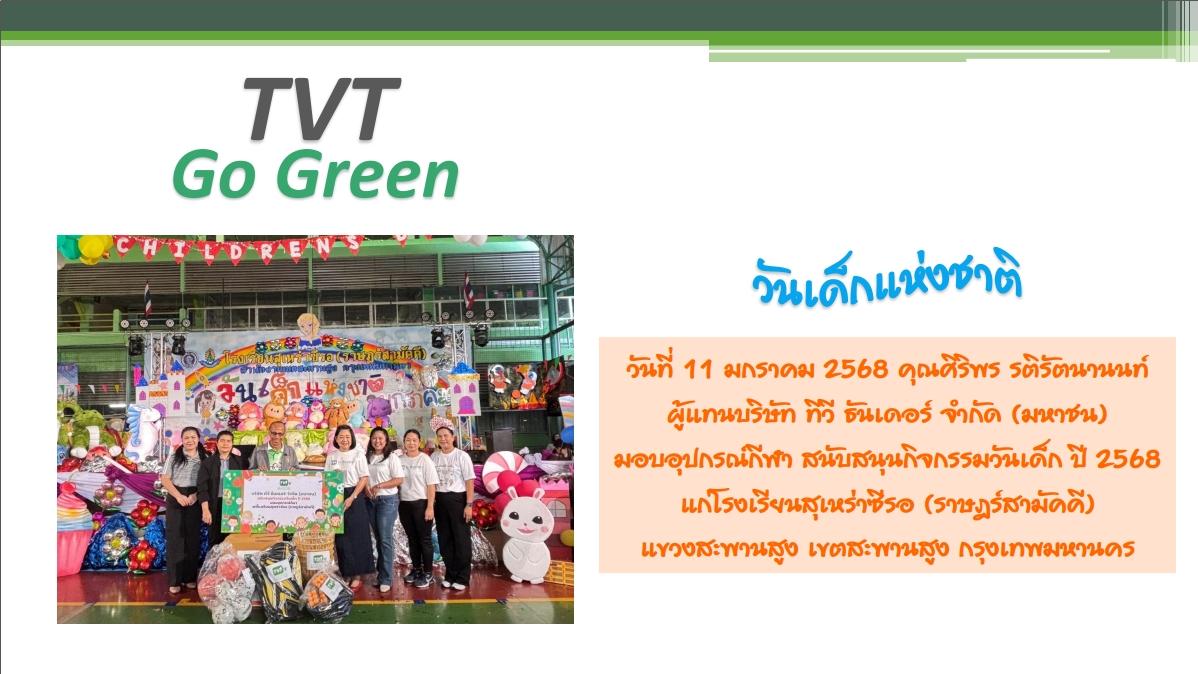
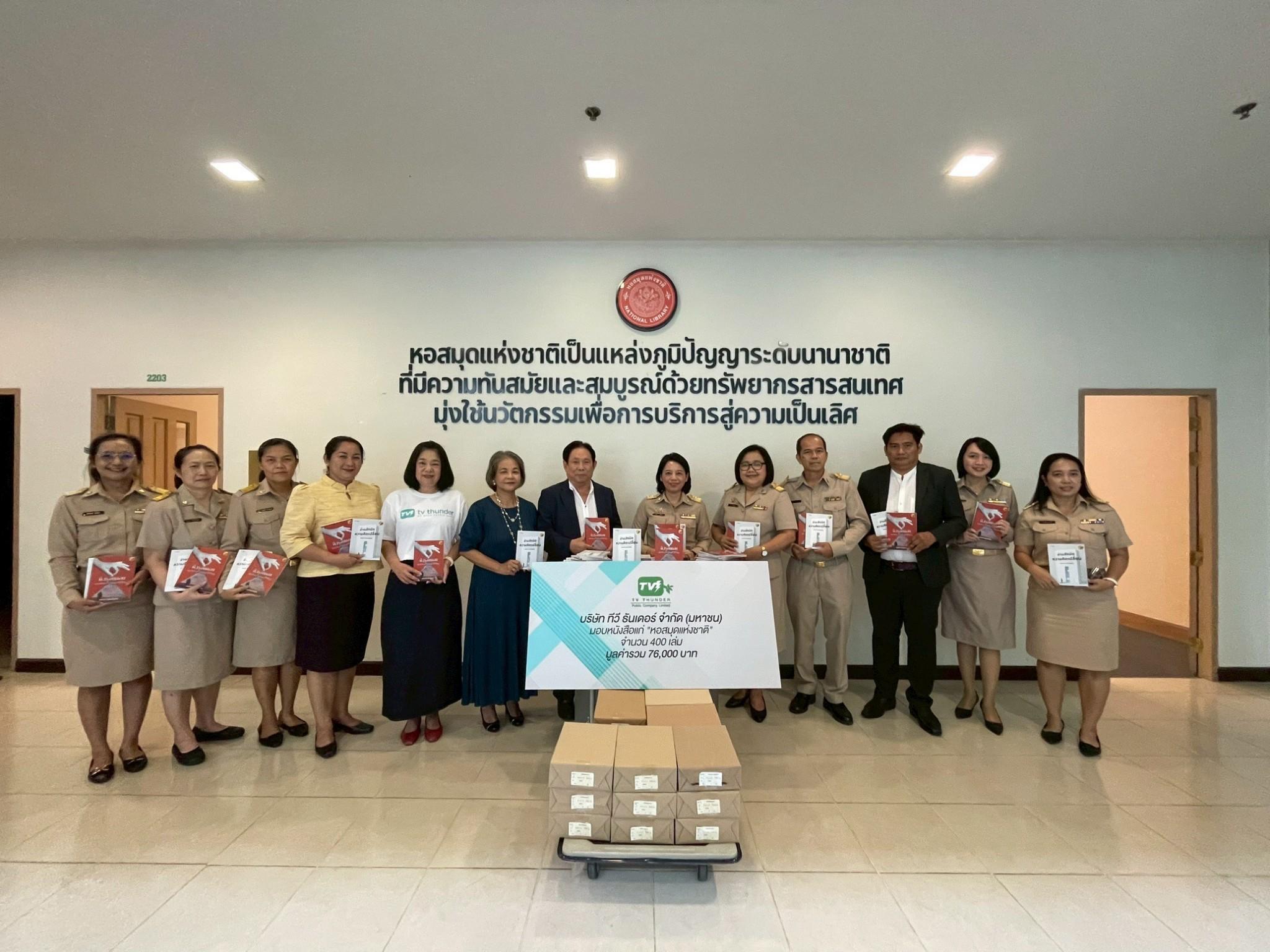
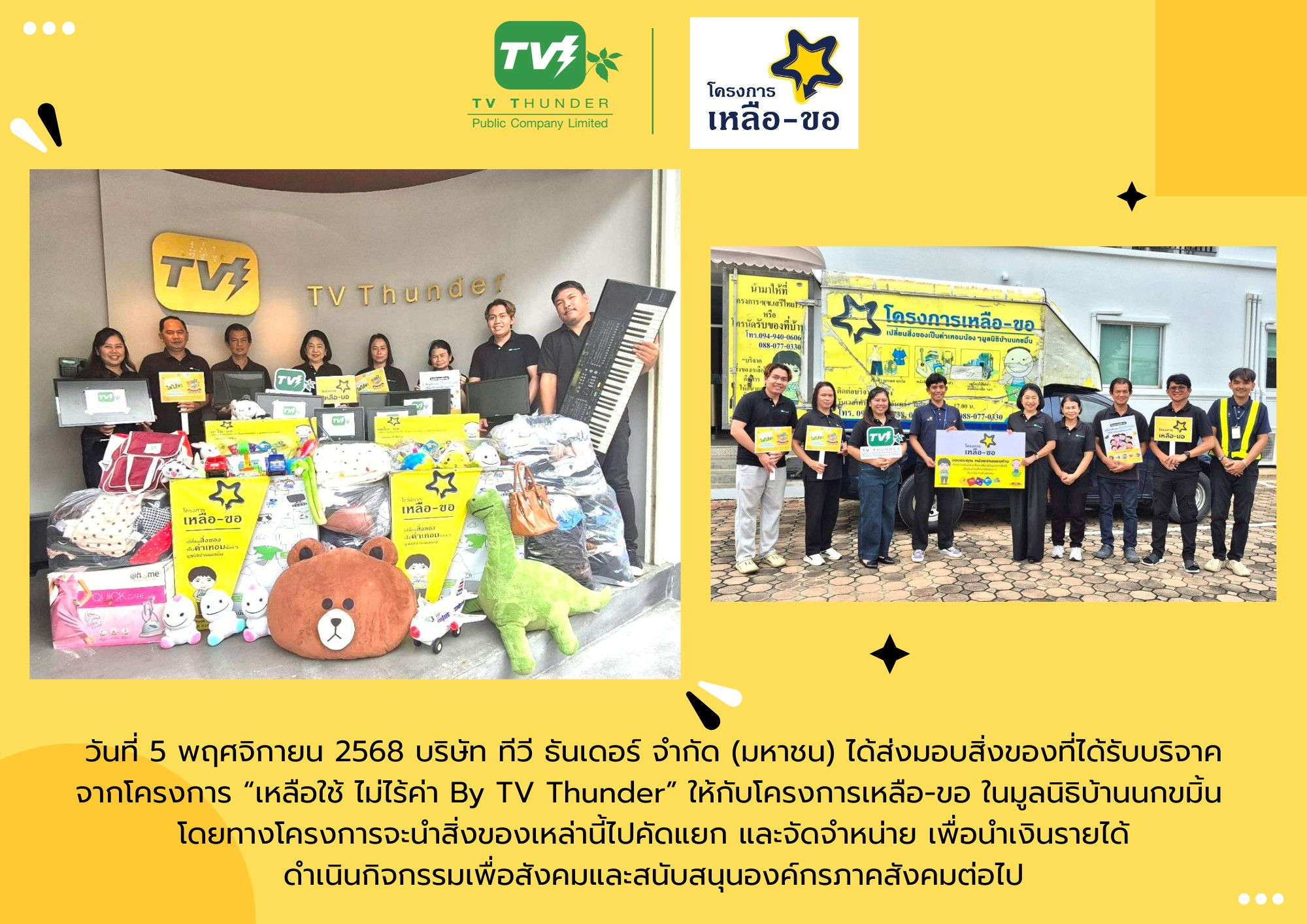
In 2025, the company supports social activities on various occasions, assisting and supporting activities of both public and private sector organizations, as well as various charitable activities, with the aim of maximizing benefits for society and the community.
Employees — Plan & Guidelines
Has an Employee Management Plan
Yes
Plan Description
Employee and Labor Management Plan
The Board of Directors recognizes the value of all employees and has established policies and guidelines for employee treatment. All employees in the Company, regardless of position, must be treated equally, receive fair and appropriate compensation, and be provided with a good working environment. Therefore, policies and guidelines regarding employee compensation and welfare have been established as follows:
-
Salary and Bonus Compensation The Company has a policy for employee compensation that considers fairness and appropriateness, based on each employee's knowledge, abilities, and performance, and aligns with the industry average. Employee compensation must be suitable for the Company's business expansion and growth. Furthermore, employee compensation is linked to the performance measurement of employees at all levels in the form of Key Performance Indicators (KPIs). Annual salary increases and annual bonus payments depend on employee performance according to KPIs, combined with the annual performance evaluation set by the Human Resources department and the Company's overall business results.
-
Other Compensation The Company has established a provident fund in accordance with the Provident Fund Act B.E. 2530 (1987) to provide sustainable long-term care for employees. Employees can choose investment plans within the provident fund according to their needs and risk tolerance. The Company has established the TISCO Master Joint Venture Provident Fund, which is registered. Employees contribute 5% of their salary to the fund, and the Company contributes an equal amount.
-
Employee Welfare In addition to providing various welfare benefits to employees as required by law, the Company has improved and added various welfare and benefits, such as life, health, and group accident insurance, annual health check-ups, and other financial assistance benefits like marriage assistance, ordination assistance, and death benefits for employees.
Personnel Development Policy The Company always recognizes that all employees are valuable resources and key factors for achieving organizational goals. The Company respects and adheres to laws and ethical principles to foster fairness, stability, and well-being for its employees. Therefore, the Company places importance on fair treatment and care, including opportunities, compensation, appointments, transfers, and appropriate welfare benefits, as well as continuous personnel development. This aims to enhance employees' potential to perform tasks in line with the Company's goals and operational directions, ensuring sustainable business growth and international competitiveness. The Company provides training and study tours in various courses, both within and outside the organization, including abroad, to employees to enhance their knowledge, abilities, and work skills in various areas.
-
Internal Training The Company provides training starting with new employee orientation to build a basic understanding of the Company's business operations, organizational culture, and collaborative work systems across various departments. This helps new employees learn and adapt to the organization effectively. To enhance knowledge and skills beneficial for work performance, the Company regularly organizes internal training for employees.
-
External Training The Company encourages employees to attend training seminars organized by external training institutions to enhance knowledge or study new innovations in various evolving fields, which can then be applied to improve and develop the organization's operations to remain competitive.
Safety, Occupational Health, and Working Environment The Company has established a "Work Safety Policy" and disseminated it to employees for their awareness and adherence. Additionally, a Safety, Occupational Health, and Working Environment Committee has been appointed as required by law to systematically and strictly implement safety operations, thereby ensuring safer work practices. The Safety Committee has the following duties and responsibilities:
-
Review operational processes and establish policies for safety, occupational health, and working environment across all sectors.
-
Announce the safety policy for employees at all levels to adhere to.
-
There are different safety development plans for each operational area, especially for high-risk areas and job types.
Safety, Occupational Health, and Working Environment Guidelines
-
The Company supports employees in working safely and maintaining good hygiene in the workplace.
-
The Company focuses on preventing accidents that may arise from work.
-
Promote safety awareness among employees through training.
-
Oversee the workplace to reduce the risk of accidents and enhance safety for all employees.
-
The Company organizes basic fire fighting training and fire evacuation drills annually.
Plan Areas
| Plan Area |
|---|
| Fair employee compensation |
| Employee training and development |
| Occupational health and safety in workplace |
Employees — Workforce
Workforce Data
| Metric | Current Year | Previous Year | Two Years Ago |
|---|---|---|---|
| Total number of employees (Persons) | 56 | 69 | 67 |
| Number of male employees (Persons) | 26 | 37 | 35 |
| Number of female employees (Persons) | 30 | 32 | 32 |
| Total employment of disabled persons (people) | 0 | 0 | 0 |
| Total disabled employees (people) | 0 | 0 | 0 |
| Total male disabled employees (people) | 0 | 0 | 0 |
| Total female disabled employees (people) | 0 | 0 | 0 |
| Total disabled workers who are non-employee (people) | 0 | 0 | 0 |
| Contributions to the fund for promoting and improving the quality of life for disabled persons | 0 | 0 | 0 |
| Total number of male employees in operational level (Persons) | 19 | 30 | |
| Total number of male employees in management level (Persons) | 5 | 5 | |
| Total number of male employees in executive level (Persons) | 2 | 2 | |
| Total number of female employees in operational level (Persons) | 24 | 24 | |
| Total number of female employees in management level (Persons) | 3 | 4 | |
| Total number of female employees in executive level (Persons) | 3 | 4 |
Employees — Remuneration & Provident Fund
Remuneration & Provident Fund
| Metric | Current Year | Previous Year | Two Years Ago |
|---|---|---|---|
| Total disabled employees (people) | 33,980,875 | 46,431,403 | 42,755,192.99 |
| Total male employee remuneration (Baht) | 16,254,676 | 22,264,064 | 20,910,350 |
| Total female employee remuneration (Baht) | 17,726,199 | 24,167,339 | 21,844,842.99 |
| Number of employees eligible to participate in PVD (persons) | 44 | 50 | 60 |
| Total number of employees joining employee provident fund (Persons) | 20 | 30 | 40 |
| Percentage of total number of employees joining employee provident fund to total number of employees (%) | 35.71 | 43.48 | 59.7 |
| Number of PVD members / Total eligible employees (%) | 45.45 | 60 | 66.67 |
| Total amount of provident fund contributed by the Company (Baht) | 658,451 | 1,061,574 | 1,049,005 |
| Total amount of provident fund contributed by employee (baht) | 658,451 | 1,061,574 | 1,049,005 |
Employees — Training & Development
Training Data
| Metric | Previous Year | Two Years Ago |
|---|---|---|
| Average employee training hours (Hours / Person / Year) | 0.56 | 2.4 |
| Employee development and training expenses (baht) | 12,198 | 51,850 |
Employees — Occupational Health & Safety
Occupational Health & Safety Data
| Metric | Previous Year | Two Years Ago |
|---|---|---|
| Total number of lost time injury incidents by employees (Cases) | 0 | 0 |
Employees — Labour Relations
Labour Relations Data
| Metric | Previous Year | Two Years Ago |
|---|---|---|
| Total voluntary resignations (Persons) | 9 | |
| Male employees who voluntary resigned (Persons) | 7 | |
| Female employees who voluntary resigned (Persons) | 2 | |
| Percentage of employee turnover leaving the Company voluntarily (%) | 13.04 | 23.88 |
| Evaluation result of employee engagement | 0 | 0 |
Employees — Employee Representation
Employees Are Represented Collectively
Yes
Forms of Representation
| Form |
|---|
| Welfare committee |
Employees — Targets
Has Set Employee Targets
No
Employees — Performance & Outcomes
Has Performance Results
Yes
Performance Description
Compensation Management To promote and support the recruitment of quality new employees and retain current employees within the organization, in addition to providing various beneficial welfare benefits to employees, the Company has a policy of managing employee compensation appropriately and fairly to ensure career growth for each position. Various data is surveyed to review the salary structure to remain competitive within the same industry. The salary structure is used in managing compensation for current employees and in considering the hiring of new employees, ensuring fairness and appropriateness based on job characteristics, responsibilities, and performance, which aligns with the Company's economic conditions and operating results. Regarding other compensation, the Company has established a provident fund in accordance with the Provident Fund Act B.E. 2530 (1987) to provide long-term sustainable care for employees. Employees can choose investment plans within the provident fund according to their needs and risk levels. As of December 31, 2025, there were a total of 20 provident fund members, representing 44.45% of all employees.
Personnel Development In 2025, the Company organized training for personnel development to ensure employees are ready for work and to grow together in business operations. The total number of employees who completed the training was 100%. The average training hours per employee was 2.40 hours/person/year. The total cost for employee training and development was 27,491 Baht.
|
Employee Training |
Year 2025 |
|
Number of courses |
15 courses |
|
Total Training Hours (hours) |
73 hours |
Communication and Grievance Channels
The Company has established a process for handling employee complaints, including the appointment of an Employee Grievance Committee. This committee has established fair procedures and processes for considering such complaints, allowing all employees to discuss, offer suggestions, or seek advice from the impartial committee.
Actions upon receiving a complaint
-
Fact-finding: The Employee Grievance Committee will proceed to collect complaints.
-
Data Processing and Screening: The Grievance Committee will process and screen information to consider procedures and propose appropriate management methods for each case.
-
Operational Measures: The Grievance Committee proposes operational measures to cease violations or non-compliance with the code of conduct and various policies to the Executive Committee or the Audit Committee for consideration, as appropriate, to mitigate damage to affected parties, taking into account the overall distress and harm.
-
Reporting of results: The Grievance Committee, or the Chief Executive Officer, or the Chairman of the Audit Committee, or the Company Secretary shall report to the Board of Directors for acknowledgment and inform the employee or stakeholder who is the complainant of the results, should the complainant disclose their identity.
Measures for protecting complainants or those cooperating in investigations
-
Complainants or those cooperating in fact-finding may choose not to disclose their identity if they believe that such disclosure would lead to insecurity or any harm.
-
In cases of self-disclosure, the Company will report on the progress and clarify the facts.
-
Complainants or those cooperating in fact-finding: the Company will not disclose names, surnames, addresses, images, or any other information that could identify the informant.
-
The recipient of the complaint must keep relevant information confidential and disclose it only as necessary, with consideration for the safety and potential harm to the complainant or those cooperating in the investigation of facts, sources of information, or related individuals. If it is deemed that there is a likelihood of distress, damage, or insecurity, appropriate protective measures shall be established.
-
Those who suffer damage will receive appropriate and fair redress through suitable processes.
-
In 2024, the Company did not receive any complaints.
Safety, Occupational Health, and Working Environment In 2025, the Company organized basic fire fighting training and fire evacuation drills. With the dedication of employees at all levels in adhering to safety, occupational health, and working environment policies and procedures, there were no work-related accidents resulting in lost time in 2025.
Customers — Plan & Guidelines
Has a Customer Management Plan
Yes
Plan Description
Customer Policy and Practices
The Company recognizes the importance of customer satisfaction to the success of its business. Therefore, it is committed to continuously seeking more efficient and effective ways to meet customer needs and has established the following policies and practices:
1. Deliver quality products and services that meet or exceed customer expectations at a fair price.
2. Provide accurate, sufficient, and timely information to customers regarding products and services, without making exaggerated claims that could mislead customers about the quality, quantity, or any conditions of such products or services.
3. Strictly adhere to all conditions agreed upon with customers. In cases where any condition cannot be met, customers must be promptly informed to jointly consider solutions.
4. Communicate with customers courteously, efficiently, and reliably.
5. Establish systems and processes for customers to lodge complaints regarding the quality, quantity, and safety of products and services, as well as the speed of response or delivery, and to ensure thorough resolution so that customers receive prompt responses.
6. Maintain customer confidentiality and not use customer information for personal gain or for the undue benefit of related parties.
7. Do not solicit, accept, or pay any benefits that suggest dishonest conduct with customers, particularly concerning the protection of customer personal data.
Regarding personal data protection, the Company strictly adheres to the Personal Data Protection Act B.E. 2562 (2019) (PDPA). The Company has announced a "Personal Data Management Policy" and implemented clear "measures" in its operations to maintain the security of personal data. All employees are communicated with and trained on what should and should not be done to avoid actions that may violate the personal data of the Company's stakeholders.
The Company has diversified its marketing policies to cope with competition and digital transformation, including adjusting its sales model from selling advertising minutes to offering integrated marketing communications (IMC) solutions that combine integrated services to meet customer needs for results beyond traditional reach. Furthermore, there are plans to expand cooperation with domestic and international partners, increase commissioned production for foreign clients, develop multi-platform content, and focus on exporting content abroad to reduce reliance on domestic television stations.
Plan Areas
| Plan Area |
|---|
| Responsible production and services for customers |
| Development of customer satisfaction and customer relationship |
| Protection of customer personal information |
Customers — Satisfaction Results
Customer Satisfaction Results
| Metric | Current Year | Previous Year | Two Years Ago |
|---|---|---|---|
| Evaluation results of customer satisfaction | 0 | 0 | 0 |
Customers — Targets
Has Set Customer Targets
No
Customers — Performance & Outcomes
Has Performance Results
No
Community & Social — Plan & Guidelines
Has a Community & Social Plan
No
Plan Areas
| Plan Area |
|---|
| Occupational health, safety, health, and quality of life |
Community & Social — Targets
Has Set Community & Social Targets
No
Community & Social — Performance & Outcomes
Has Performance Results
Yes
Performance Description
Responsibility to Consumers The company creates drama series to promote and benefit society, such as the drama "Luang Ta Mahachon," which incorporates moral lessons and teachings in every episode aired, to ensure society receives maximum benefit from watching the program. Furthermore, as a fundamental aspect of the television production business, each episode to be broadcast must undergo a process of filtering out inappropriate content before being aired to the public. The production team is directly responsible for this before sending the program tape to the department that regulates and oversees the content of the television station. Only after the program content has been reviewed by the content regulation and oversight department can it be broadcast.
Social Responsibility through Television Program Production Process The company defines its role in supporting and promoting society through Corporate Social Responsibility (CSR) activities integrated into its operational processes, or CSR-In-Process, under the motto "Green Entertainment: Good Society, Good Mood." The company has created valuable and beneficial programs for society. As a content producer, it must maintain and develop production standards and create quality works that benefit Thai society and reach diverse audiences, as well as expand the target audience to be as comprehensive and clear as possible through television program presentations to win the hearts of viewers nationwide. It is committed to instilling awareness, fostering good inspiration in viewers, and hoping that viewers can apply the good ideas from the company's various programs to their daily lives. Additionally, the company has created the series "My Friend Inherited a Homestay" to promote and benefit society, raising awareness among viewers and the general public about the value and importance of water resources, focusing on instilling in Thai people the habit of conserving water, which is a vital natural resource. In every episode aired, viewers and the general public will receive entertainment and valuable insights simultaneously.
Promoting employment for the underprivileged: "people with disabilities" ”
TV Thunder Public Company Limited has played a significant role in creating opportunities for people with disabilities to participate equally in society, as well as promoting career development for people with disabilities and complying with relevant laws and opportunities, to ensure that people with disabilities have income, careers, and an improved quality of life. The employment of people with disabilities is in accordance with legal requirements.
Innovation and dissemination of innovations derived from operations that are responsible towards the economy, society, environment, and stakeholders.
-
1. The company has established a policy for accepting student interns during semesters or breaks to disseminate operational knowledge to students who wish to apply their academic knowledge to practical work. Students will learn the television program production process from experienced teams to apply it effectively.
-
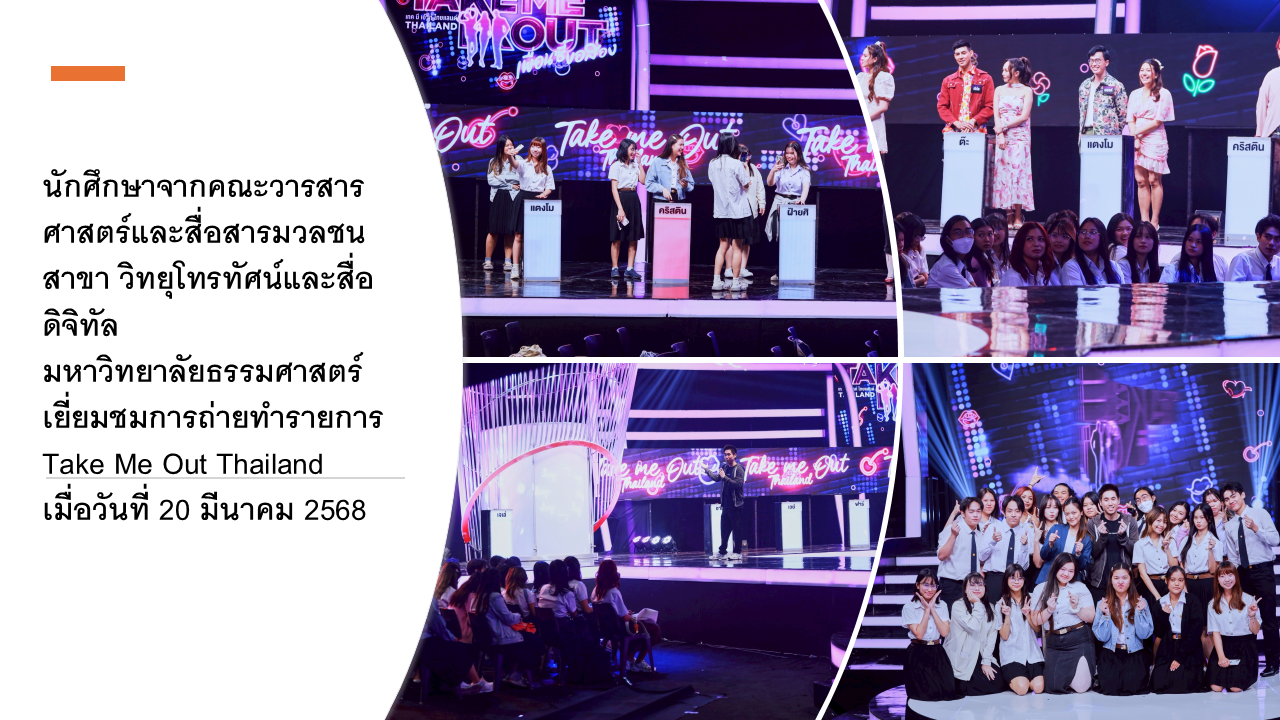
2. The company has provided opportunities for various educational institutions to visit its television program production facilities to disseminate innovation. Students will observe the program production process, gain knowledge, and witness the actual work of artists, actors, and hosts.
In 2025 Students from the Faculty of Journalism and Mass Communication, Department of Radio, Television, and Digital Media, Thammasat University, visited the program's filming. Take Me Out Thailand On 20 March 2025
-
3. Disseminating innovations derived from operations to educational institutions by providing support through speakers, who are experienced, expert, and professional executives from the company, to lecture and impart knowledge to university students in various educational institutions regarding television program production.
Law Violation Incidents
Law Violation Incidents
| Metric | Current Year | Previous Year | Two Years Ago |
|---|---|---|---|
| The total number of cases or incidents of significant violations of laws or regulations regarding social and human rights (Cases) | 0 | 0 | 0 |
| The total number of cases or incidents that cause significant labor disputes (Cases) | 0 | 0 | 0 |
| The total number of cases or complaints related to consumer rights violations (Cases) | 0 | 0 | 0 |
| The total number of cases or complaints related to partner rights violations (Cases) | 0 | 0 | 0 |
| The total number of cases or incidents that cause disputes with the community/society (Cases) | 0 | 0 | 0 |
| The total number of cases or incidents related to cyber security or customer data breaches (Cases) | 0 | 0 | 0 |
| The total number of cases or incidents related to safety and occupational health at work (Cases) | 0 | 0 | 0 |